

ARCHIVE UK Gambling Laws and Regulations 2025
This is one of the strongest consumer protections embedded in the UK casino regulations. If you are asked for affordability documentation at a UKGC-licensed casino, this is a legal requirement — not optional. Automated checks use open banking data and credit reference information. For most recreational players, the the operators above changes are largely invisible day-to-day.
The government proposes that gaming machines accepting direct debit payments must allow customers to set time and monetary thresholds. The majority of responses stated that there should be the ability for customers to set voluntary limits on gaming machines accepting direct cashless payments. Having considered the consultation objectives, stakeholder responses and supporting evidence, we are proposing to lift the prohibition on direct debit card payments on gaming machines subject to the introduction of the player protection measures detailed within this chapter. The government will introduce regulations through a draft affirmative statutory instrument to ensure that, for every 2 Category B gaming machines sited in AGC or bingo premises, at least one Category C or D gaming machine of a similar size is also sited on the premises. This will allow for targeted supportive measures to be taken for the sector, potentially including a more liberalised ratio of Category B gaming machines in these venues.
We propose to permit casinos to offer sports betting alongside other activities and will take steps to free up unused 2005 Act casino licences where there is no prospect of development for reallocation to other local authorities. The 2005 Act sets out a range of restrictions based on the assumption that restrictions on supply (for example, casino numbers and gaming machine availability) were an important protection. The Gambling Commission provided advice highlighting the low test purchasing pass rates for gambling machines in alcohol licensed premises. Responses to our call for evidence from the on-course betting industry emphasised that since 2019 it has taken a number of steps to raise standards, including improved training and staff processes, increased test numbers at venues, and focusing on events where children were more likely to attend. While we acknowledge the views of people with personal experience of gambling harm, banning all Category D machines would disproportionately affect small businesses reliant on this trade in some of the UK’s most deprived communities. Conversely, on a wider population basis there was limited evidence to suggest that Category D slot style machines were serving as a primer for future problematic engagement with gambling.
On society lotteries, industry, campaigners and retailers all supported increasing the statutory minimum age to 18 years. Summaries of evidence and views from different groups are outlined below, but where evidence is pertinent to particular policy proposals it is discussed in more detail in the following sections. In 2022, the Gambling Commission’s Young People and Gambling Survey identified that 74% of young people who have ever spent their own money on gambling were with their parents and/or guardians at the time and 78% say they did so for fun. A recent Gambling Commission survey indicated that problem gambling rates among young adults appear to peak at the ages of 20 to 21.

The modernisation of out-dated and restrictive land-based measures was a core component of the proposals outlined in the white paper. In April 2023, DCMS published its white paper on gambling setting out the government’s plans for bringing the regulation of the gambling sector into the digital age. Increasing the maximum cap that licensing authorities can charge – made negative statutory instrument. However, we also received evidence from a small number of additional respondents. The majority of these responses came from respondents who submitted evidence to the original consultation. We also received 16 additional responses to a supplementary consultation which was held specifically to gather further evidence on the reform of the 80/20 rule.
For example, 5 out of the 7 operators focus on betting, so the PoP dataset accounts for operators providing 86% of online betting in Great Britain, as against 38% of online gaming. We recommend that licensing authorities update their policy statements using a wide range of data and analysis, including making use of spatial tools and public health data to identify vulnerable areas and to state their position on additional gambling premises in these areas. CIAs could allow licensing authorities to put a presumption against new premises in a particular area, based on evidence related to harm, which may take the form of ‘high impact zones’ being identified within a licensing authority boundary. We consider that allowing bingo premises to offer side bets in a more flexible or expanded form as described by industry, within a defined set of parameters, would allow them to diversify their offer to customers and that conditions could be attached to reduce the risk of harm. When granting a premises licence, a licensing authority must consider the impact the premises might have on the surrounding area, for example, the risks of anti-social behaviour or of children attempting to access gambling facilities.
Beyond the 10x wagering cap, the new rules require casinos to display all bonus terms clearly and in plain language before a player opts in. All UKGC-licensed casinos must offer deposit limits, loss limits, session limits, and wager limits. Responsible gambling sits at the heart of the UK casino regulations 2026. To understand exactly what to look for, read our guide on how to choose a UK online casino.
The Gambling Commission also has a programme of research and can directly commission research to inform its regulation, but this focuses primarily on monitoring gambling participation and prevalence of gambling-related harms. Funding for gambling research is available both from government via UKRI and through a system of annual contributions from industry to fund research, education and treatment of gambling-related harms. In October 2021, fees for online operators were increased by 55% and application fees by 60% and in April 2022, non-remote licence fees were increased by 15%. The Commission can also investigate and take action against gambling sites and operators which are illegally targeting the British market without a licence.

Today, casino online sites must make an application to the UKGC if they want to operate and advertise legally in the UK. While the UK Gambling Commission was previously tasked with regulating internet gambling sites based in the United Kingdom, the purview of their powers increased significantly. In November, 2014, the UK Gambling Commission (UKGC) became the controlling body for British iGaming and any operator wishing to serve residents were required to hold a valid gaming licence.
Consultation questions
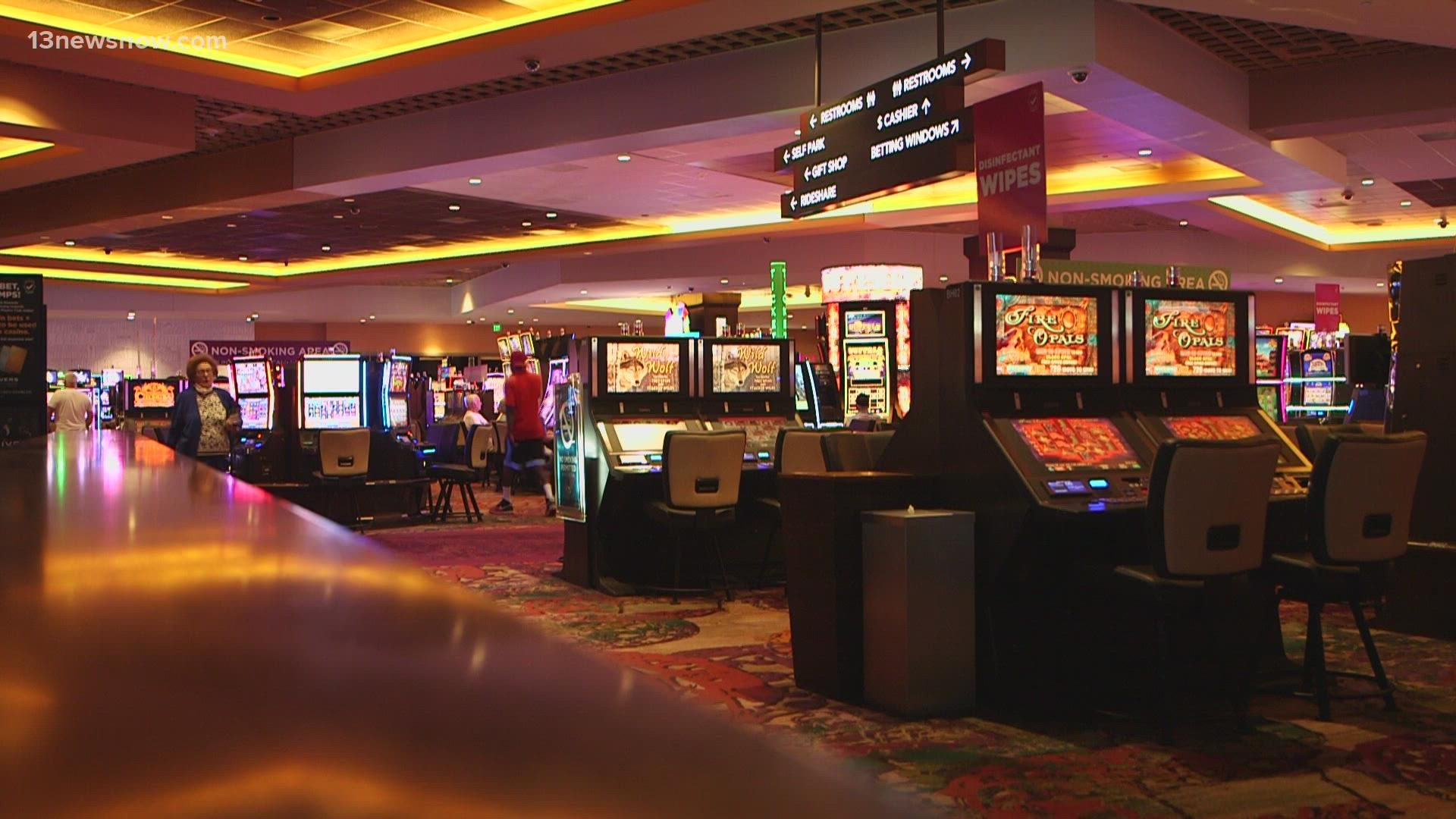
The Gambling Commission issues a code of practice on the provision of gaming machines in alcohol-licensed premises. There is no upper limit placed on the number of gaming machines allowed, but if a venue wants to install more than two machines, they must apply to the licensing authority to do so (as set out in section 283 of, and Schedule 13 to, the Gambling Act 2005) and pay the prescribed fee. In England and Wales, alcohol licensed premises currently have an automatic entitlement to up to two Category C or D gaming machines. Following a consultation on proposals for changes to Gaming Machines and Social Responsibility Measures, the maximum stake on B2 machines (Fixed Odds Betting Terminals) was reduced from £100 to £2 in April 2019, to reduce the risk of gambling-related harm. These include a variety of venues in practice, including ‘high-end’ casinos which cater for high-net worth (mainly international) clients and have a business model based primarily on live gaming tables. The 2005 Act casinos are also subject to minimum overall and non-gaming space requirements which were introduced alongside a ratio of machines to tables aimed at ensuring a balanced offer of different products.
In this new regulatory era, success won’t be measured purely by revenue per machine, but by how effectively an operator manages risk, safeguards players, and shows credible, data-backed compliance. For the first time, staff training on gambling harm is a statutory requirement, not just a licensing expectation. By embedding self-regulation tools directly into the gaming experience, these requirements mirror protections familiar to online gambling—and levels the regulatory playing field.
£5 online slot stake limit — the maximum bet on any single spin of an online slot is now capped at £5 for all players. The our tested operators came into force following the Government’s Gambling White Paper, with the bulk of legislation enacted across 2024 and 2025. This guide covers every major change under the UK casino regulations, what each rule means for players, and how to stay safe under the new framework. Please let us know how we can help you by leaving a message at the email address pr@casino.net.
We intend to take a similar approach by giving the Gambling Commission the power to apply to court for such an order and use these powers to disrupt illegal gambling operators. In the most serious instances of non-compliance or risks of harm, Ofcom will also have the power to apply to the courts for “business disruption measures”. The Gambling Commission, as well as evidence from the Review, has shown that unlicensed sites pose an increased risk to the most vulnerable consumers. The black market is relatively easy for people to access who are actively trying to find and gamble with illegal operators online. From the limited evidence that is available, we would assume that the size of the black market does not currently account for more than 2.5% of remote gambling that takes place in Great Britain. The Danish Gambling Authority’s 2022 Report on illegal gambling estimates that the online gambling channelisation rate (the percentage of all gambling that takes place legally) is 98% in Great Britain and therefore the black market accounts for 2% of online gambling.
Figure 2: Current and proposed number of Category B machines for different types of casinos
The same principle would apply for in-fill machines and tablets. By contrast, industry responses argued that Option 2 would be highly restrictive for many operators and would overall provide less commercial flexibility than is currently available under the 80/20 ratio. This is a necessary objective to help mitigate against gambling-related harm. Therefore it is likely that increases in Category B machines will lead to slight increases in sessions with greater losses. In considering gambling-related harm we were attuned to the various perspectives provided by respondents.
Online operators use data to identify and restrict accounts in response to suspected fraudulent activity and for commercial reasons (for example customers betting too successfully). Once a suitably effective and secure platform is in place, the Gambling Commission will consult on making data sharing on high risk customers mandatory for all remote operators. While the Commission licences operators and individuals, local authorities (and licensing boards in Scotland) licence premises and have the power to place conditions on licences as well as to grant or refuse them. It was subsequently amended in 2014 to extend to operators based anywhere in the world who are offering remote gambling to customers based in Great Britain.
By contrast, the majority of gambling operators, across all sectors (bingo, arcade, casino and betting) advocated for either no increase or a small increase of 10%. Our proposal to introduce an age limit on these machines is a precautionary measure to protect children and young people from gambling-related harm. The government will allow direct debit card payments on gaming machines through a made negative statutory instrument, which will also include some of the player protection measures outlined in this chapter, such as the account verification requirement for each transaction. We propose that the default limits for B1 machines are aligned to those machines in arcades, bingo halls and betting premises. The government proposes that mandatory limits must be included on gaming machines accepting cashless forms of payments.
- If a casino had 700sqm of gambling space, it would need to have at least 250sqm of non-gambling area.
- However, Public Health England (PHE) compiled, assessed and reviewed evidence on gambling participation and harm as part of the Gambling-related harms evidence review which was initially published in September 2021, then revised in January 2023 by the Office for Health Improvement and Disparities.
- As the response and the SI set out, the stake limits are for online slots only and do not apply to other casino games, such as roulette or blackjack.
- For higher-risk play, it means the system is increasingly designed to slow things down, ask more questions, and intervene earlier.
- As per the name of the act, a UKGC licence grants the operator advertising access to UK consumers.
- However, the Gambling (Licensing and Advertising) Act 2014 brought changes to the licensing regime for operators.
Annex E: Organisations and published authors that responded to the call for evidence
We think that this 30 second transaction time, coupled with the other player protection measures that we are proposing, should ensure that the use of direct debit cards on a machine has a similar level of friction to playing with cash. Following 30 seconds, the player would be able to start depositing money onto the machine. We would suggest that the 30 second period should start from when the machine has read the card and approved the payment. Some respondents stated that any transaction time should at least ensure a break from the machine that is equivalent to the time it takes to access additional funds from an ATM. Responses varied on the length that the transaction time should be, with industry broadly agreeing on 30 seconds and non-industry respondents proposing either 90, 120 or 180 seconds. Our aim throughout the development of this policy has been to replicate the experience of playing on a machine with cash and the deposit and committed payment limits play an important role in the current customer journey.
Finally, it focuses on minimizing the negative impact of gambling on society by protecting children and other vulnerable groups from problem gambling. Second, it seeks to prevent gambling from being linked to any form of criminal activity. First, it aims to ensure that all gambling is conducted in a fair and open way. The Act established the Gambling Commission and transferred licensing responsibilities from the magistrates’ courts to local authorities and Scottish licensing boards. It is also responsible for monitoring and supervising all gambling operations and can carry out inspections and inquiries.
In addition to identifying a lawful basis for processing, operators will need to comply with other aspects of GDPR, such as any applicable requirements for transparency with data subjects, and safeguarding of personal data. If the decision making is based on the data subject’s explicit consent3. GDPR gives data subjects certain qualified rights in relation to their data, such as the “right to erasure” and “the right to prevent decisions being made solely based on the automated processing of data”.
A more substantial role for the Commission in directly commissioning research to inform its regulatory role will also produce further progress in building the evidence base around gambling, supporting our understanding of gambling-related harms and ways to prevent them. Online members of BGC offered to pay 1% of GGY, matching the commitment of the four biggest operators in 2019, and land-based casinos to pay 0.4%. A licence condition requires operators to make an annual financial contribution to one or more organisations which deliver or support research into the prevention and treatment of gambling-related harms, harm prevention approaches, or treatment for those harmed by gambling. Increasing the amount of data that the Commission collects from operators will improve its capability to regulate the gambling industry in a modern way and will allow it to identify compliance issues at an earlier stage. Unlicensed sites can pose a variety of risks to customers, including allowing access to those who have self-excluded from gambling through GAMSTOP. The Commission will build on the expansion of datasets it collects from operators for regulatory purposes to develop a rich resource that will strengthen the evidence base on gambling and inform data-led regulatory action.
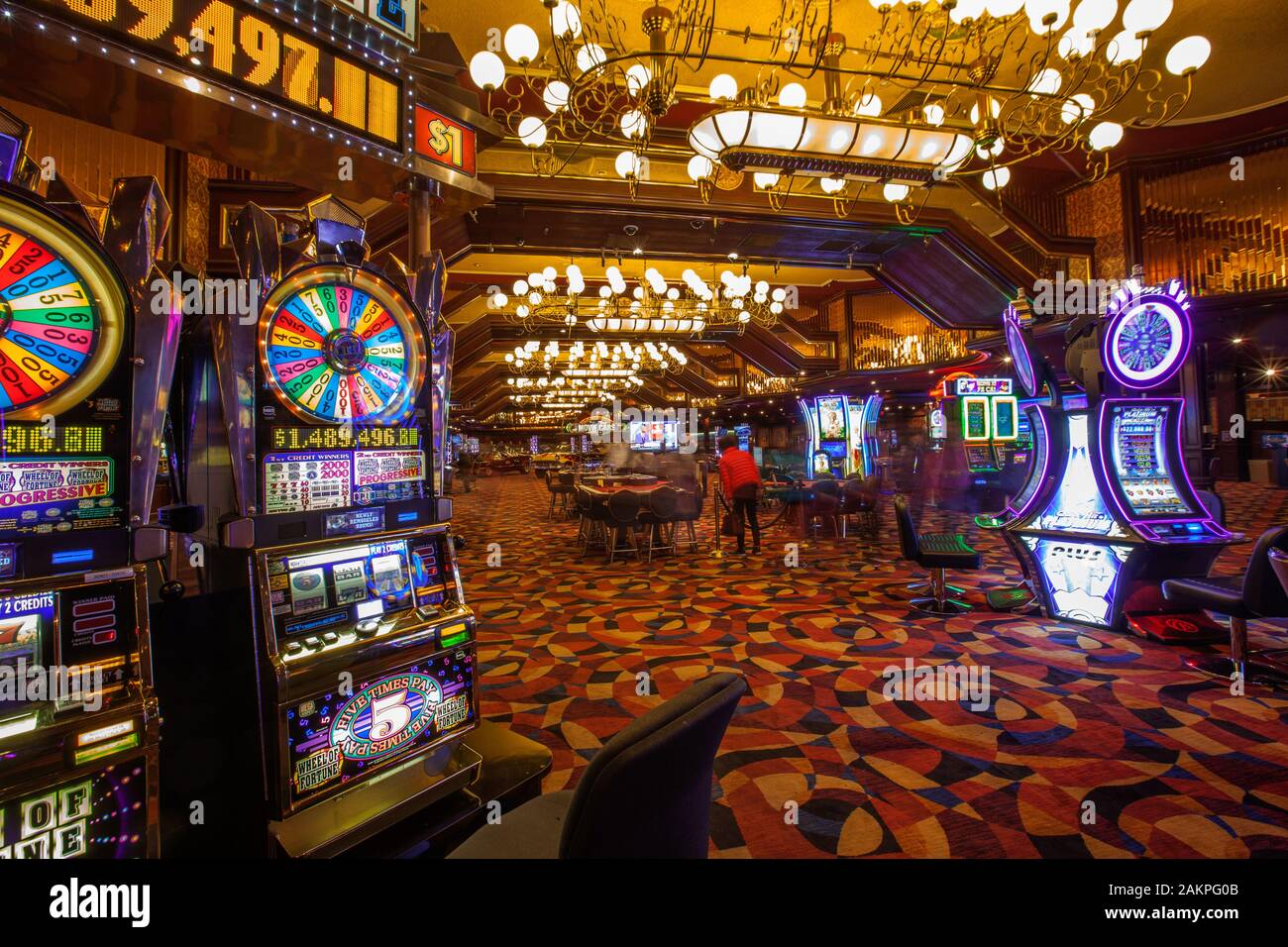
The rise of digital gambling has triggered sweeping reforms—but until now, land-based casinos operated under softer guidelines, particularly when it came to machines. For converted casinos, however, there is an additional restriction on the number of betting machines relative to the size of the floor area of gambling area in that casino. Regulation 3 of these Regulations amends section 172(5)(b)(i) of the Gambling Act 2005 (c. 19) (“the Act”) to change how to calculate the number of gaming machines that may be made available for use in small casinos licensed under the Act. “extended converted casino premises” means premises in which gaming machines are made available for use in accordance with the extended gaming machine entitlement;
Additionally, some gambling products enable charities and other non-commercial organisations such as sports clubs to raise valuable funds. Horse racing in particular has a mutually beneficial relationship with betting, and the levy paid by bookmakers on their racing derived revenue contributes around £100 million a year to support the sport. While many gambling companies do operate overseas hubs, the jobs in this country are geographically dispersed, with hubs of high skill work in areas like Stoke-on-Trent and Leeds. For the majority of people in the Gambling Commission’s research, gambling was just another normal activity which they reported feeling completely in control of. For most people who participate, gambling is a leisure and entertainment activity, as explored in the Gambling Commission’s research into why people gamble and its research into customer journeys. In addition to the approximately 300,000 people categorised as ‘problem gamblers’, there are approximately 1.8 million people in Great Britain categorised as ‘at risk’.
Broadcasters also provided evidence highlighting that their sector is vulnerable financially following the pandemic, and a loss of revenue from gambling adverts could impair public service broadcasters’ ability to meet their obligations. Alongside operators themselves, online platforms also have an important role to play in ensuring that advertising is safe and socially responsible. The industry will commence a review of the sixth edition of the IGRG Code, including considering the extent to which 25+ age filtering could be used with regards to other digital advertising where that functionality is made available. Research from Australia also indicates that for young people exposure to more types of advertising is correlated with gambling participation and harmful gambling. Data from the Gambling Commission’s online tracker survey shows that younger adults are more likely to follow operators on social media than older adults, and more likely to spend money as a result of operators’ posts than older age groups.
With technological developments, land-based casinos have been able to introduce a greater range of customer protections and the experiences of applying these across each type of licence have provided insight on the likely impact of any proposed changes. Since the Gambling Act 2005, land-based casinos have operated under two licensing regimes with different requirements in terms of the type and volume of product they are able to offer, as well as venue size. Illegal operators often try to subvert the system, including on player protection requirements, and this move will further strengthen the regulatory environment protecting those most at risk of harm. In a move aimed at supporting those who may be suffering harm or in the grip of addiction, gambling operators will now be required to do more to protect customers. We will consult on the protections needed for gaming machines to be able to accept cashless payments directly.
While the evidence of a clear causative relationship is limited, there is sufficient evidence of an association between higher staking on slots and identified risks of harm to justify action on a precautionary basis as part of the wider package of protections. Finally, non gamestop casinos the operators considered in this data request all have different approaches to ascribing risk scores, so findings will vary by operator. The April 2021 data request particularly sought to understand the association between staking behaviour and harm (measured through operator assigned risk score as the best available proxy — see Figure 8 below).
As set out above, on 8 December 2020, the UK Government announced a long-awaited review of British gambling laws. Does your jurisdiction permit virtual currencies to be used for gambling and are they separately regulated? In terms of the regulatory obligations imposed upon licensees by British licences, these are described above. Licences are available to persons based outside the United Kingdom. In February 2024, the (then) Government announced that, following consultation, maximum stake limits for online slots will be introduced and set at £5 per spin (or, for those aged 24 and under, £2 per spin).
The Department for Culture, Media and Sport (DCMS) published its gambling white paper in April 2023, which set out the government’s plans for modernising the regulation of the gambling sector. If these changes affect how your personal data is processed, DCMS will take reasonable steps to let you know. Any changes to this privacy policy will apply to you and your data immediately.